
PVC Penny Coin Garage Flooring Rolls
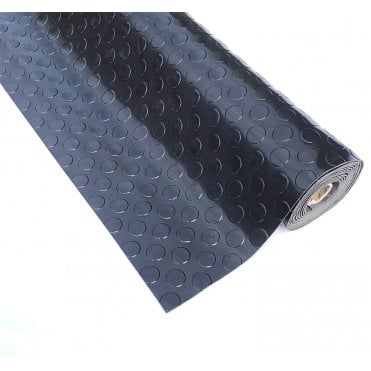
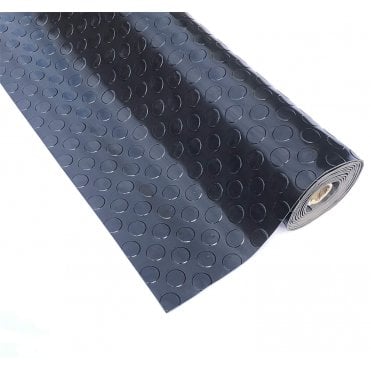
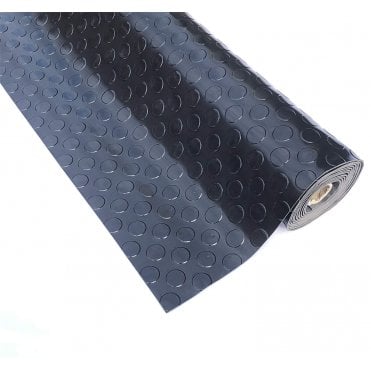
Shop black PVC garage flooring rolls with a raised penny coin pattern. The current range is 1m wide and 2.5mm thick, with 3m, 4m and 5m lengths available for covering suitable garage, workshop, storage and utility floors.
Check the complete dimensions, base surface, installation method and documented performance before ordering. A raised coin pattern does not automatically establish a particular slip, chemical, fire, outdoor or vehicle-load rating.
PVC Garage Flooring Rolls
PVC flooring rolls provide a continuous flexible covering for suitable garage, workshop, storage and utility floors. The current On1shelf range is made from flexible PVC with a raised penny coin surface and is supplied in pre-cut black rolls.
This is functional PVC floor matting rather than decorative sheet vinyl, luxury vinyl tile, linoleum or rubber flooring. These materials have different constructions and properties and should not be treated as interchangeable.
Current PVC Flooring Range
The current range shares the following specifications:
- Material: flexible PVC
- Colour: black
- Surface: raised penny coin pattern
- Width: 1m
- Thickness: 2.5mm
- Lengths: 3m, 4m and 5m
Verify the dimensions shown on the individual product page before ordering, particularly where several pieces must meet or fit around fixed equipment.
Choosing the Correct Roll Length
- 1m × 3m: nominal coverage of 3m² before cutting or wastage.
- 1m × 4m: nominal coverage of 4m² before cutting or wastage.
- 1m × 5m: nominal coverage of 5m² before cutting or wastage.
Nominal area is calculated from the stated width and length. The usable coverage may be lower after trimming, joining sections, fitting around obstructions or allowing for imperfect walls and floor edges.
Measuring the Floor
- Measure the maximum length and width of the area being covered.
- Identify doors, columns, machinery, shelving and other fixed obstacles.
- Plan the direction of the penny coin pattern and any necessary joins.
- Allow for trimming and reasonable installation tolerance.
- Check door, threshold and equipment clearances against the 2.5mm flooring thickness.
- Calculate the number and length of rolls required using the fixed 1m roll width.
- Confirm that narrow offcuts will not leave weak or poorly supported edges.
Penny Coin Surface Pattern
The surface has regularly spaced raised circular studs, commonly described as a penny coin or coin pattern. This creates a clearly defined surface texture and functional appearance for suitable working and storage areas.
A textured surface must not be described as slip-proof. Slip performance depends on the exact material, test method, footwear, installation, wear, cleaning and contaminants such as water, oil or dust. Use a documented slip-test result where a particular safety classification is required.
PVC Flooring Is Not Rubber Flooring
The products in this department are listed as flexible PVC. They should not be described as rubber merely because rubber matting may be used for some similar applications.
PVC and rubber can differ in flexibility, odour, temperature behaviour, chemical compatibility, surface wear and reaction to adhesives or cleaning products. Compare the documented material and performance of the exact product rather than relying on a general comparison between the two materials.
Planning the Installation
The supporting floor should be stable, clean, dry, level and compatible with the chosen installation method. Remove dirt, grease, loose coatings and debris before positioning the flooring.
Unroll the material and follow any documented conditioning or flattening instructions before cutting. Plan the complete layout first, particularly where several rolls will be joined or the penny coin pattern must run in the same direction.
Some PVC flooring may be loose-laid, taped or bonded, but the correct method depends on the product, floor surface and intended use. Use only an adhesive or tape confirmed as compatible with the PVC flooring and underlying surface.
Edges, joins and corners must remain secure and level. Raised edges, movement or poorly positioned joins can create trip hazards or allow dirt and liquid to collect beneath the flooring.
Garage and Vehicle-Floor Considerations
Before using PVC flooring beneath vehicles, confirm that the exact product is suitable for the expected wheel loads, tyre contact, manoeuvring, temperature and exposure to automotive fluids.
Do not assume that general garage suitability proves resistance to every fuel, lubricant, brake fluid, cleaning chemical or tyre compound. Obtain an exact compatibility table where chemical or staining resistance is important.
Cleaning and Maintenance
Remove loose dirt regularly and clean the surface using methods documented as compatible with the PVC material. Avoid unverified solvents, aggressive chemicals or abrasive tools that could damage, soften or discolour the flooring.
Clean spillages promptly and inspect the flooring for movement, cuts, curling, worn surface areas, damaged joins and contamination beneath the material. Replace damaged sections where they can no longer be installed securely.
Performance Claims to Check
- Slip resistance: require the test method, result and tested conditions.
- Chemical resistance: check the exact substance, concentration, temperature and exposure time.
- Oil or acid resistance: require a material compatibility table rather than a universal claim.
- Outdoor suitability: confirm ultraviolet, weather and temperature documentation.
- Fire performance: use the exact tested classification and applicable standard.
- Vehicle loading: confirm suitability for the expected wheel loads and tyre movement.
- Water resistance: distinguish the PVC sheet from the completed floor, including joins and edges.
Typical Applications
Subject to the exact product specification and installation requirements, PVC flooring rolls may be considered for:
- Domestic garage floors
- Workshop and work-area flooring
- Storage and utility rooms
- Sheds and suitable outbuildings
- Workbench or shelf protection
- Compatible van and vehicle interiors
- Temporary protective floor covering
These are general application examples rather than universal suitability claims. Check the expected traffic, loading, environment and exposure before installation.
Related Mats and Flooring
- Browse industrial rubber matting and flooring for rubber rolls, cut lengths and floor tiles.
- Explore industrial mats for specialist workplace and hazard-control products.
- Choose anti-fatigue mats for suitable standing workstations.
- Shop entrance mats for dirt and moisture control at doorways.
- Use floor cable protectors for compatible temporary cable routes.
Frequently Asked Questions
Is this PVC flooring made from rubber?
No. The current products are listed as flexible PVC. PVC and rubber are separate materials and should not be used interchangeably in product titles or specifications.
What sizes are currently available?
The current products are 1m wide and 2.5mm thick, with 3m, 4m and 5m lengths.
How much floor area does one roll cover?
Before cutting, a 1m × 3m roll covers a nominal 3m², a 1m × 4m roll covers 4m² and a 1m × 5m roll covers 5m².
Does the penny coin pattern make the floor non-slip?
Not automatically. A raised pattern provides surface texture, but any slip-resistance claim requires a documented test result under relevant conditions.
Is the flooring resistant to oil, fuel and chemicals?
Only make this claim where the exact PVC compound has documented compatibility with the particular substance, concentration, temperature and exposure period.
Can PVC flooring be used outdoors?
Only where the exact product is documented for the expected ultraviolet exposure, temperature, weather and length of use.
Can the flooring simply be stuck down?
The correct installation method depends on the PVC product and base surface. Use only a compatible adhesive or tape and follow the relevant installation instructions.
Is the completed floor waterproof?
Do not describe the complete installation as waterproof without considering joins, edges, penetrations and the supporting floor. The properties of the PVC sheet alone do not establish a waterproof flooring system.