
PVC Construction Site Walkway Matting
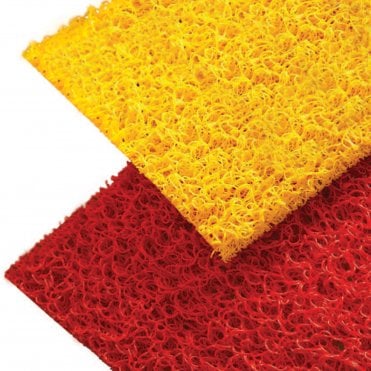
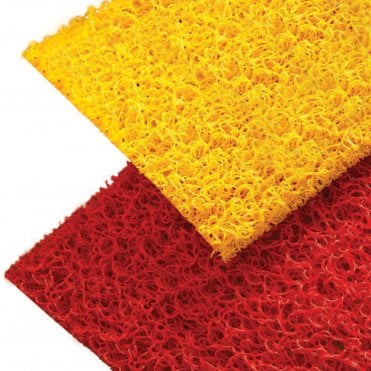
Shop roll-out PVC walkway matting for designated pedestrian routes on compatible construction sites, industrial premises and commercial workplaces. Choose red or yellow 120cm x 12m rolls with an open-loop, free-draining construction.
Walkway matting does not replace proper route preparation, drainage, lighting, housekeeping or suitable footwear. Check the underlying surface, installation requirements and documented product performance before ordering.
Roll-Out Walkway Matting for Construction and Industrial Areas
PVC walkway matting can provide a clearly defined pedestrian surface in compatible construction, industrial and commercial environments. The current range consists of 120cm x 12m rolls in red and yellow, with an open-loop construction designed to allow water and loose dirt to pass beneath the walking surface.
This product should not be confused with load-rated ground-protection panels, temporary roadways or vehicle-access mats. No vehicle, machinery or heavy-equipment load capacity is currently published for this range.
Choosing the Correct Walkway Matting
- Application: Confirm that the matting is intended for pedestrian use in the proposed environment.
- Underlying surface: Install it only over a suitably prepared, stable and adequately supported surface.
- Route dimensions: Measure the usable walkway width and length, including entrances, corners and changes in level.
- Drainage: An open construction allows liquid to pass through, but the underlying surface must still drain correctly.
- Contaminants: Check compatibility with oils, chemicals, cement residue and cleaning products encountered at the site.
- Temperature and weather: Verify the documented operating range and outdoor suitability for the exact installation.
- Visibility: Choose red or yellow according to the site’s route-marking system. Colour alone does not establish compliance with a safety standard.
Installation and Site Safety
The matting should lie flat without curled ends, unsupported sections or unsecured edges. It must not be used to bridge holes, deep ruts, unstable ground or significant changes in level.
Inspect the complete route before use and ensure that it remains clearly marked, adequately lit and free from materials, cables and other obstructions. Clean both the matting and the floor beneath it regularly.
No mat can guarantee a slip-free surface. Water, mud, oil, dust, footwear, installation and maintenance all affect performance. Damaged or permanently deformed matting should be removed from service.
Related Mats and Flooring
- Browse floor-safety and slip-resistance products.
- View outdoor safety and erosion-protection matting.
- Compare industrial mats and workplace matting.
- Explore the complete mats and flooring range.
Frequently Asked Questions
Is this heavy-duty ground-protection matting?
No published vehicle or machinery load capacity is currently provided. It should be positioned as pedestrian walkway matting rather than heavy-equipment ground protection.
Can vehicles drive over this matting?
Do not promote it for vehicle access unless the supplier provides a documented load rating and installation specification for that use.
Can walkway matting prevent every slip?
No. Slip risk also depends on the underlying surface, contaminants, drainage, installation, cleaning, lighting, footwear and maintenance.
Can it be used on muddy or uneven ground?
It must not be treated as a substitute for preparing and maintaining the pedestrian route. The supporting surface should be stable, suitable and reasonably level.
Can the roll be cut?
Only cut the matting when the supplier’s instructions confirm the approved method. Finished edges must lie securely and must not create a trip hazard.